Research Foundation

Motivation, research gap, precedents, stakeholders, and personas.

This page uses the existing motivation draft and The Gap document as the main written evidence. The persona PDF remains embedded as the original persona artifact.

Source: motivation-whySource: The GapArtifact: Persona PDF

Why Maple Bridge

Original motivation from the local draft.

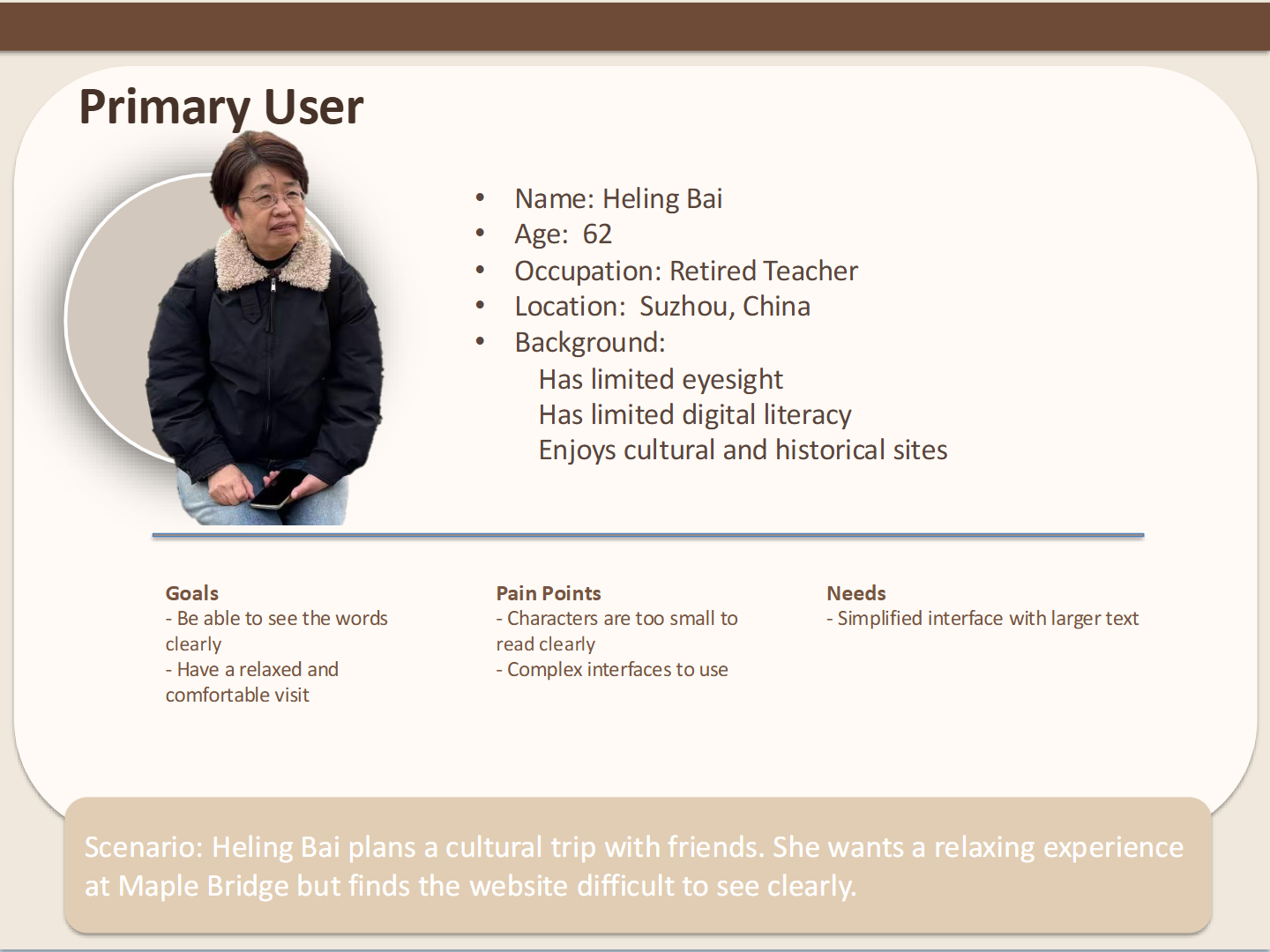
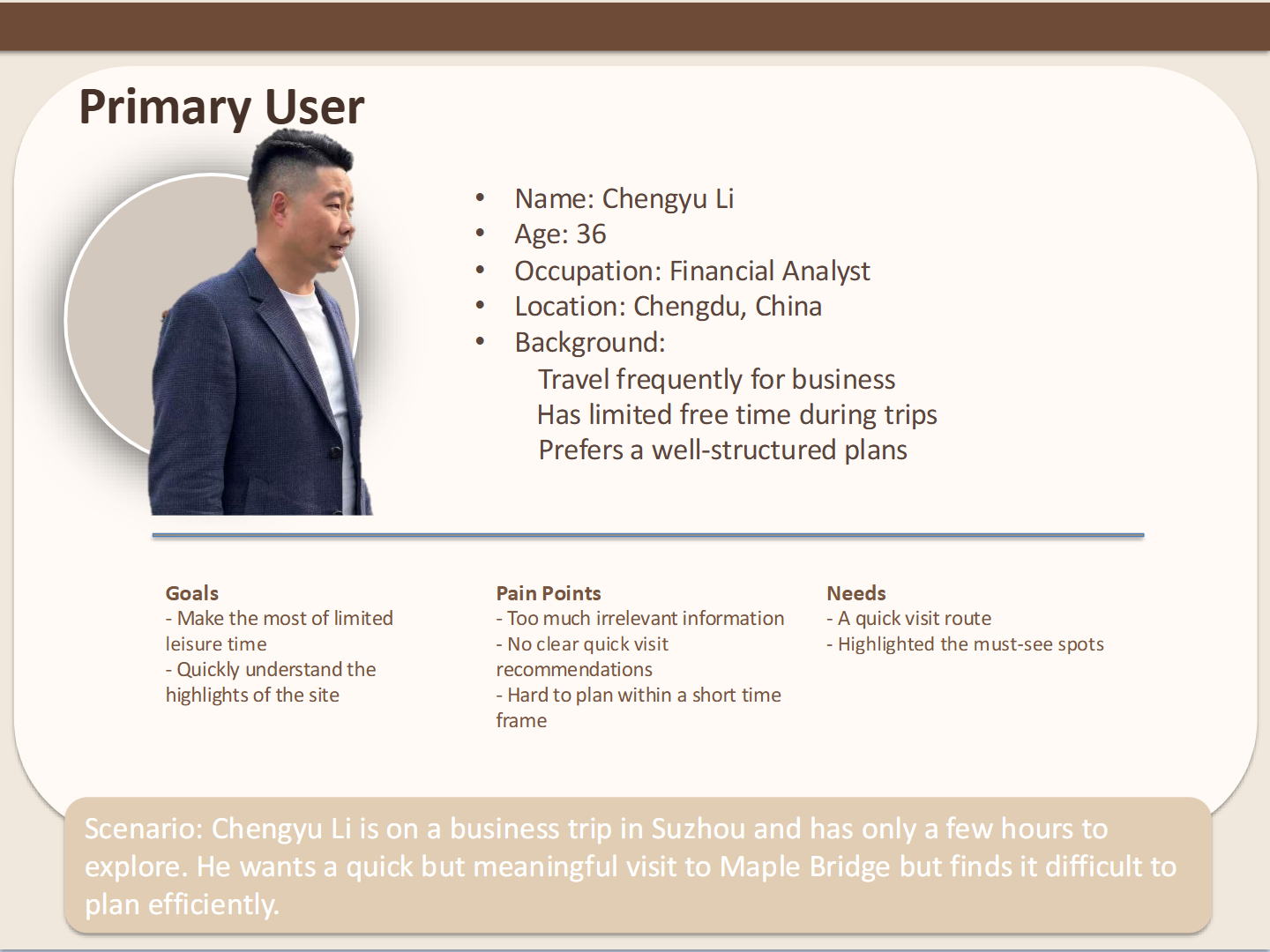
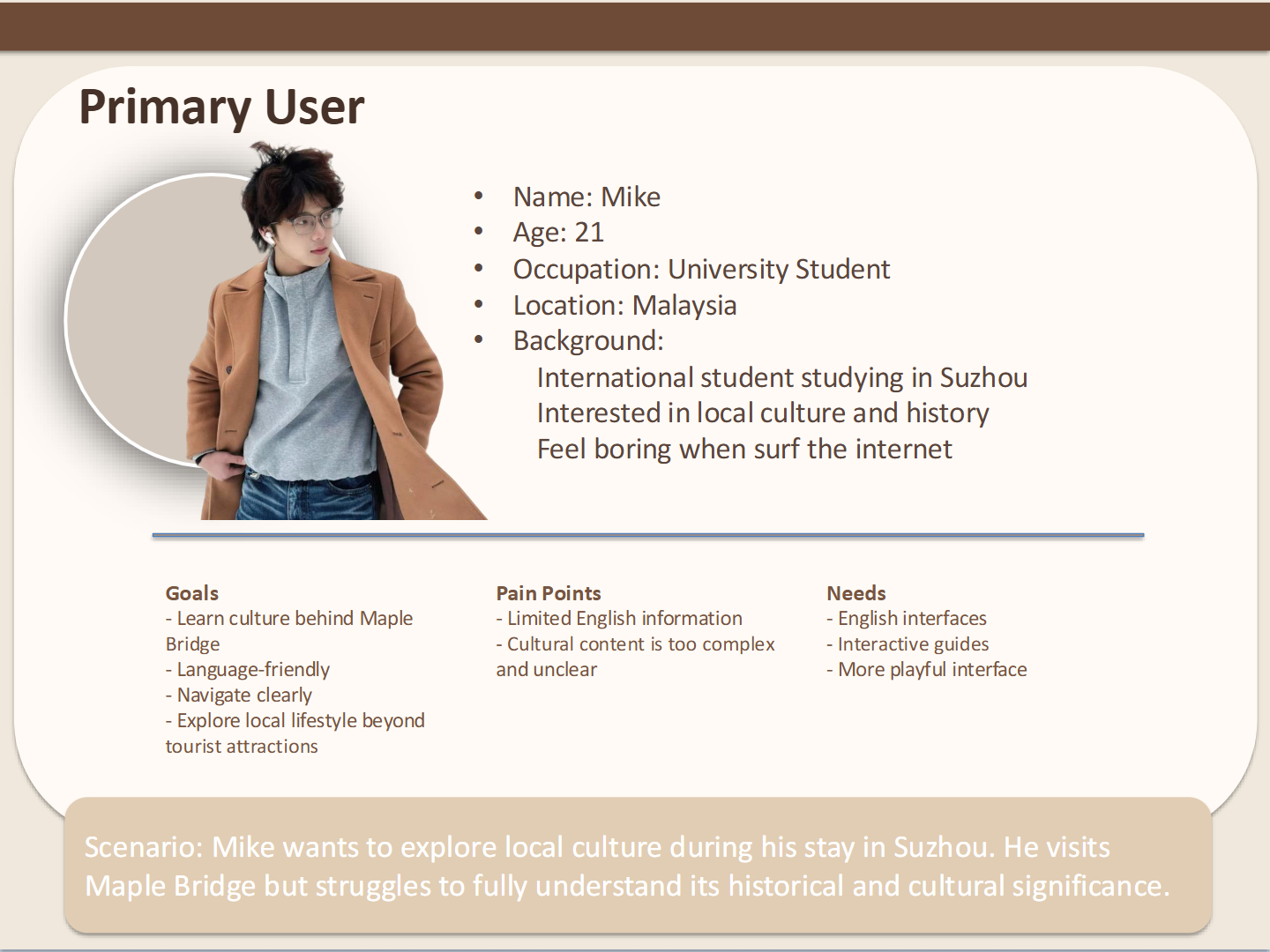
We have chosen A2, Suzhou Grand Cannel – Maple Bridge, since enormous visitor is probable to meet some barriers. For instance, first-time tourists lack of comprehension regarding popular photo spots; Older adults getting lost and language issues for international visitors. In such circumstances, visitors often struggle to form a coherent understanding of the attraction, which means current tourist experiences often devolve into “photo-just”. Apparently, this situation not only makes it difficult to truly showcase the cultural heritage of the scenic spot, but also traps visitors in a dilemma resembles to an "information cocoon".

To address this issue, we reckon that adopting a web-based online interactive platform is appropriate. We uphold the principle of not overcomplicating or rigidifying traditional cultural heritage. Since we can assemble playful micro-interactions to reduce the exploration threshold. Such as check-in challenges, lightweight story guidance, and online interactions on conventional ritual elements (e.g. online fortune-telling stick drawing, prayer rituals). In addition, our system also involves the rudimentary function of a Tour Guide Tool to satisfy the tourists’ core requirements, inclusive design and international. Specifically, we integrate map function, multi-language shifts, tourists’ photo publication together.

Summary, we aim to help different kinds visitors can navigate Maple Bridge calmly and comprehend the cultural treasure simultaneously.

Source: motivation-why source document
The Gap

Academic and commercial source base.

Review and prospect of digital cultural tourism research in China and abroad from the perspective of new quality productive forces

View the article

Immersive HCI for Intangible Cultural Heritage in Tourism Contexts: A Narrative Review of Design and Evaluation

View the article

Digital Platform Design for Cultural Heritage Tourism Sites: A Case Study of Tianyi Pavilion in Ningbo

View the article

A 50-Year Review and Prospect of the Relationship Between World Heritage Protection and Tourism Development

View the article

3 Things They Did Well

Strengths identified in the gap document.

Multi-dimensional Digital Archiving & High-Fidelity Visualization

These cases demonstrate an extremely high level of technical rigor, capable of transforming complex cultural heritage into perceptible digital assets. For instance, the official website of the Palace Museum uses the "Digital Treasure Hall" to conduct ultra-high-precision 3D modeling of cultural relics, allowing users to closely observe details that are difficult to access physically; academically, the paper "paper2" explores how to utilize digital technology to achieve the long-term preservation of heritage, providing theoretical support for high-precision modeling.

Immersive Spatial Narrative & Virtual Experience

Excellent projects not only showcase objects, but also recreate historical atmospheres by constructing virtual spaces. The Datang Night City uses 720 panoramic technology to build an immersive street that spans time and space, allowing users to experience the prosperity of the Tang Dynasty even in the cloud; The official website of Suzhou Gardens combines the gardening philosophy of private gardens with the tour route through digital guided tours, achieving a leap from "landscape display" to "impression perception".

Social Collaboration & Academic Resource Democratization

Some platforms have successfully established knowledge-sharing communities, reducing the barriers to accessing professional knowledge. The "Huaxia Ancient Sites Map" adopts a typical "crowdsourcing" model, allowing ancient sites enthusiasts across the country to jointly build the map by marking and uploading data. This aligns with the logic in "paper1" regarding the application of geospatial big data in heritage protection, achieving a positive interaction between academic research and public participation.

3 Things They Missed

Gaps that motivate the Maple Bridge design direction.

Lack of Playful Interactivity & Gamification

Most existing commercial platforms are still at the "passive presentation" stage, lacking the "playful experience" emphasized by Human-Centric Computing. For instance, Datong Night City, although visually impressive, still has an interaction logic limited to click-and-transition, lacking role-playing or task-driven in-depth participation. Even in the SCIRP papers discussing interactivity, more attention is paid to the technical indicators of the interaction interface rather than how to guide users to learn cultural background through game-based mechanisms while "playing".

Ignoring the needs of other stakeholders

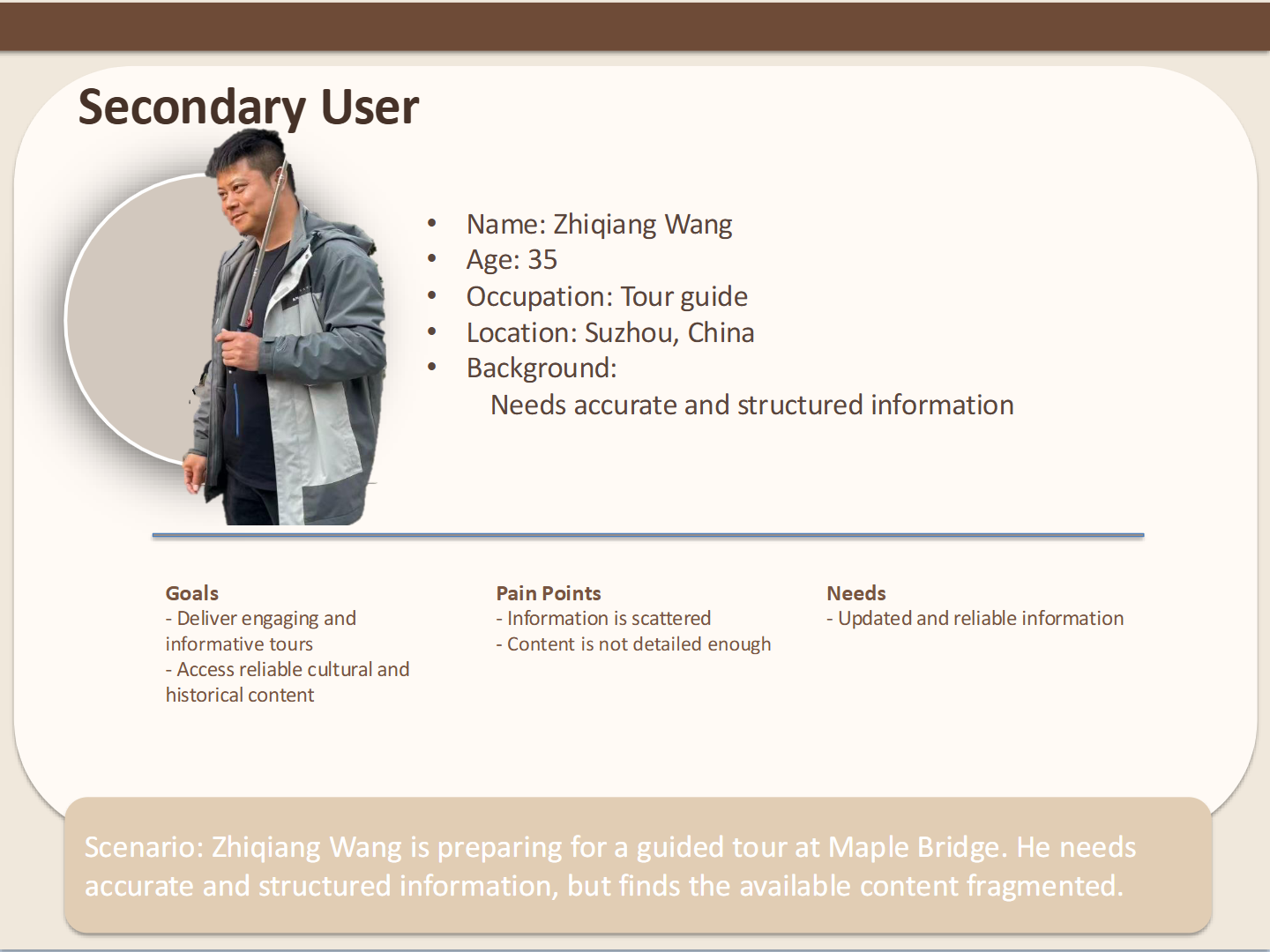
In the design and operation of these platforms, the focus is placed on the primary service recipients - tourists' single visit needs. They optimize functions related to ticket reservations, scenic spot introductions, etc., aiming to enhance the visiting efficiency and convenience for out-of-town visitors. However, the platforms ignore the real needs of various stakeholders, including local residents, community managers, and cultural protection practitioners. The most prominent issue is the disregard for the local resident group. Local residents, as the long-term holders, participants, and guardians of cultural heritage, their core demands such as daily usage scenarios, community cultural participation, and access to local-specific services are completely overlooked in the current functional architecture, interaction design, and service provision of the platforms.

Fragmented User Engagement & Lack of Feedback Loops

Although some cases allow users to upload content, there is a lack of a deep co-creation mechanism. For instance, although the Huaxia Heritage Map has a lot of data, users only engage in simple information sharing among themselves, lacking closed-loop feedback mechanisms such as "collaborative protection" or "academic discussions"; the social function of the Palace Museum's official website is relatively independent, failing to deeply integrate users' personal insights or secondary creations into the core narrative of the scenic area, resulting in users' participation feeling being limited to "watching and observing".

Source: The Gap.docx

Personas

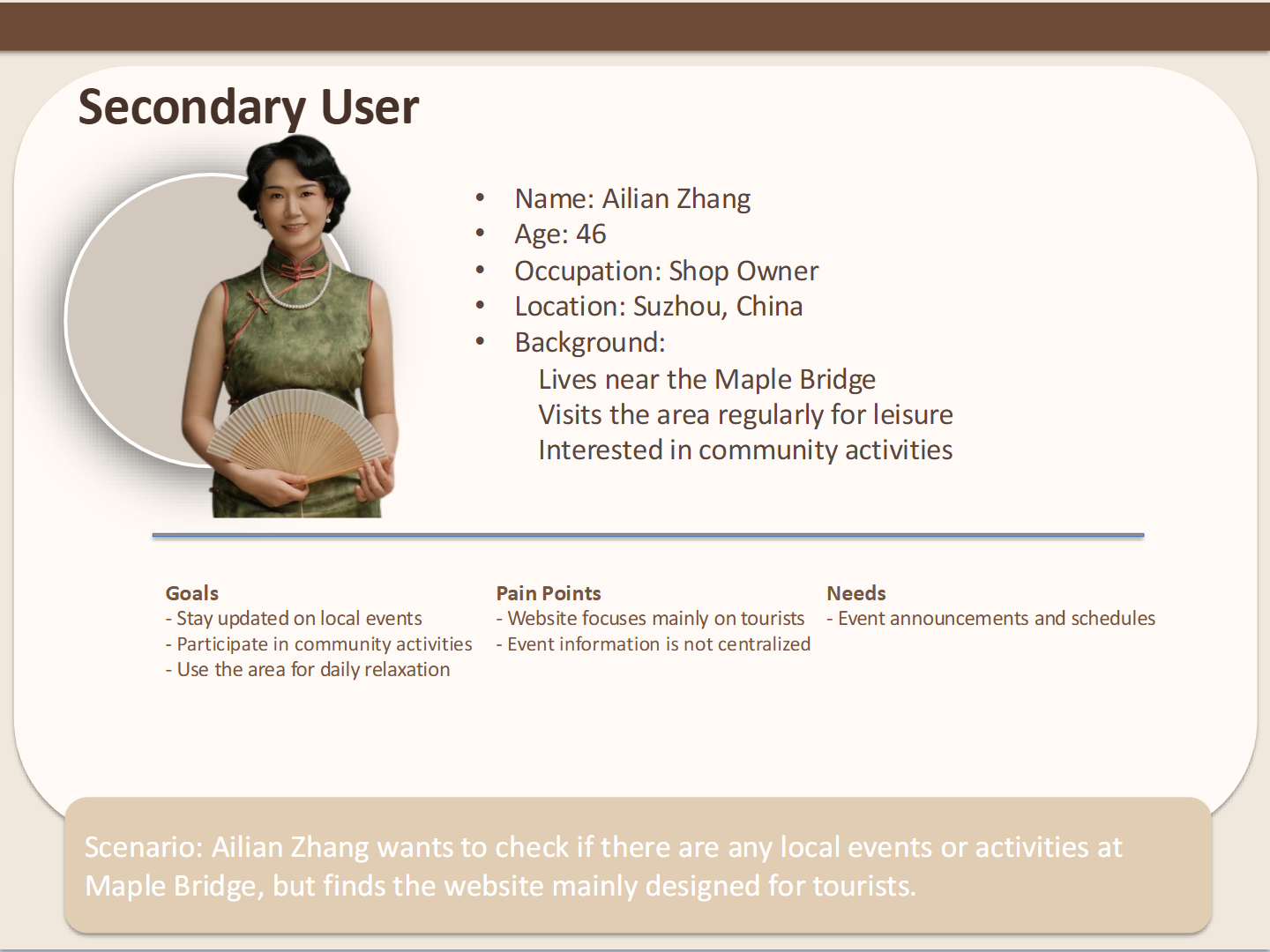
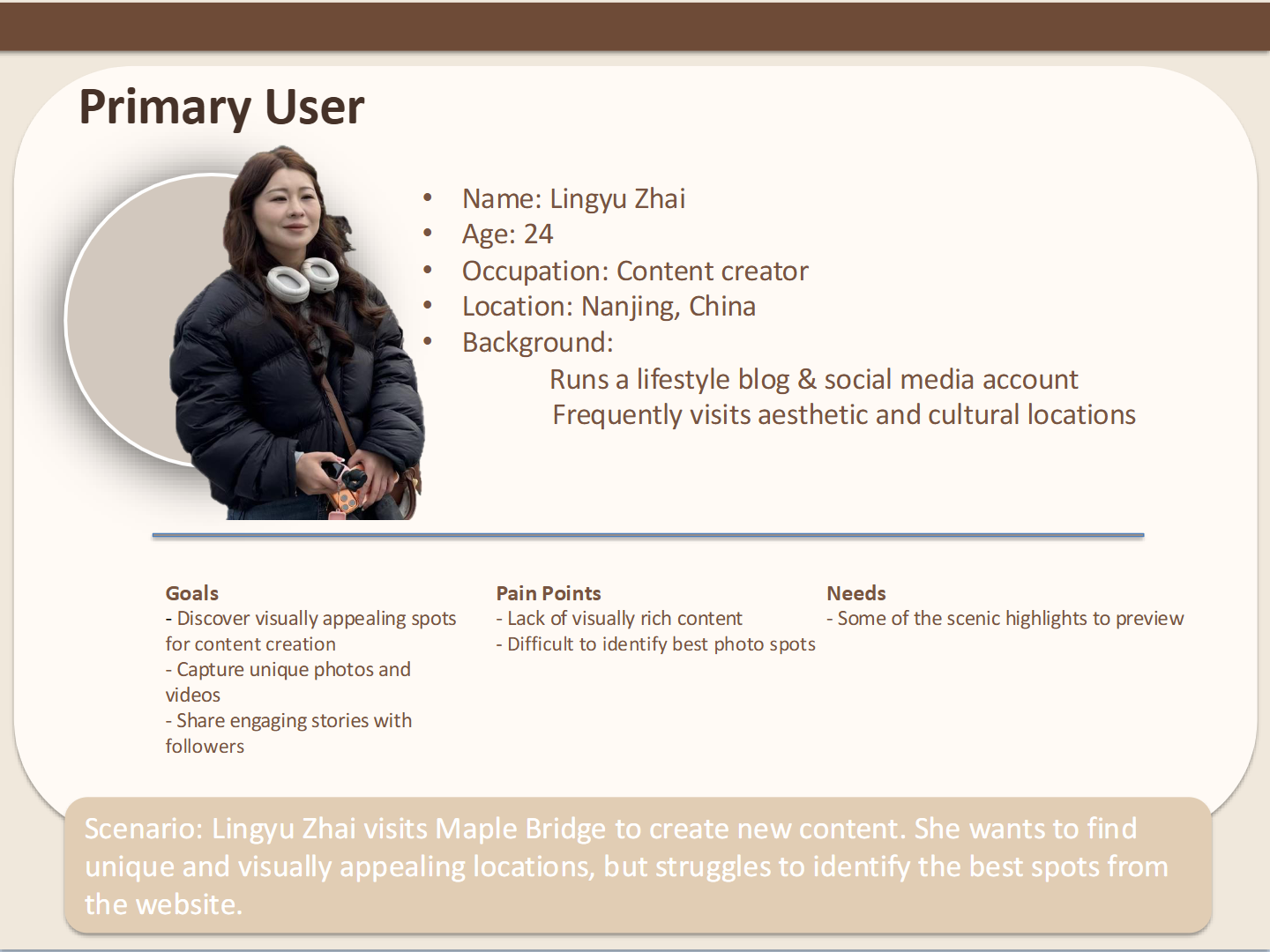
The original persona PDF is embedded as the source artifact.

Persona Evidence

CPT208 persona source PDF

Open PDF in new tab
CPT208 persona page 1
Page 1
CPT208 persona page 2
Page 2
CPT208 persona page 3
Page 3
CPT208 persona page 4
Page 4
CPT208 persona page 5
Page 5
CPT208 persona page 6
Page 6